



For thousands of years, the city of Lahore has been a hub for commerce, politics, and the arts. Located in the Punjab region of Pakistan, Lahore is one of the oldest cities with numberless of treasures from the Mughal era. If you’re only in Lahore for one day, be sure to put a visit to the incredible Walled City at the very top of your travel itinerary.
The Walled City of Lahore, officially called the “Inner City” or “Androon Shehr” (Urdu: اندرون شہر), is located in the northwestern section of Lahore. This location is considered the most ancient part of the city. Believe it or not, some historians believe this area dates back to 2,000 BC. There are now about 22,000 properties within just a 2.5 square kilometer area. The current population inside the Lahore Wall is around 200,000.
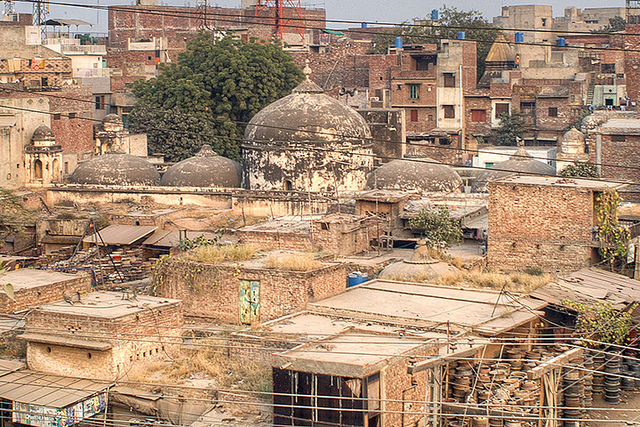
Travelers who didn’t do their research before visiting Lahore are often shocked to see no wall around the “Walled City.” The nine-meter brick wall that was all around this part of the city stood firm throughout the Mughal and Sikh eras. Sadly, most of the original wall was destroyed in 1857 when the British took over Lahore. Even though the wall isn’t fully there, a few of the major entrance gates are original.
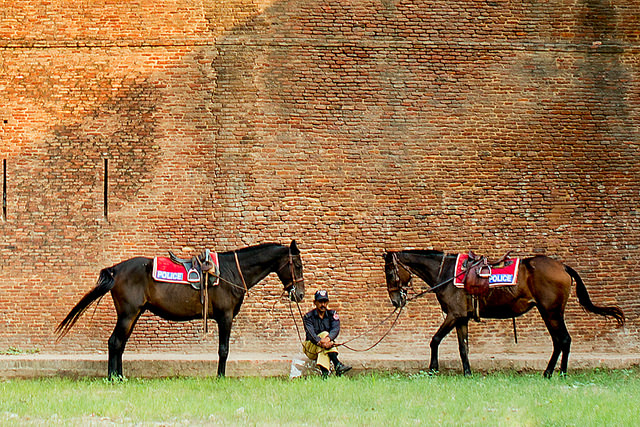
In its heyday, the Walled City of Lahore had 13 ornately decorated gates. Unfortunately, most of these gates were totally destroyed during the British invasion and the 1947 riots. The best-preserved gate you can visit today is the Roshnai Gate. Located near Lahore Fort, this gate was used for hundreds of years as the main entrance to the Walled City. Translated as “Gate of Lights” in English, Roshnai Gate was lit up every night during the Mughal era.
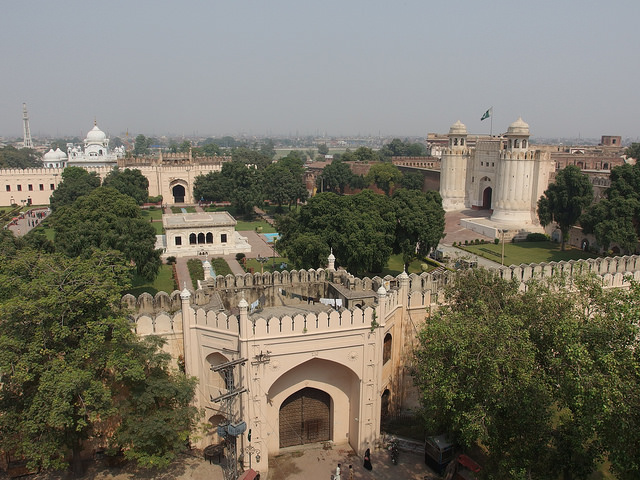
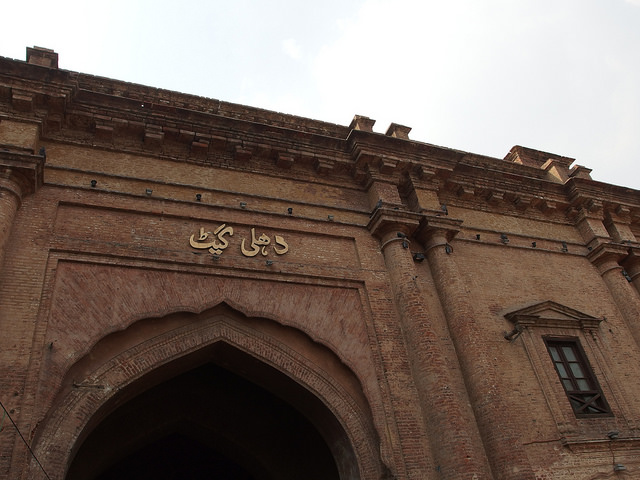
While there are a few other surviving gates, none are as well preserved as Roshnai Gate. However, it’s well worth your time to stop by these half-preserved or renovated gates named Bhati Gate, Delhi Gate, Kashmiri Gate, Shairanwala Gate, and the Lahori Gate. In case you were wondering, here are the names of the gates that were totally destroyed: Akbari Gate, Masti Gate, Mochi Gate, Mori Gate, Taxali Gate, Shah-Alami Gate, and Yakki Gate.
As you walk around this “Inner City,” you’ll get an authentic taste of modern Pakistani life. There are tons of bazars selling colourful clothing, succulent street food vendors, and even musicians playing local instruments. You really need to go into this region well prepared. The streets are extremely narrow, and there are tons of people and cars zooming in all directions. You can easily get lost without at least a basic orientation of the city. It’s impossible not to get swept away in the energy of this area.
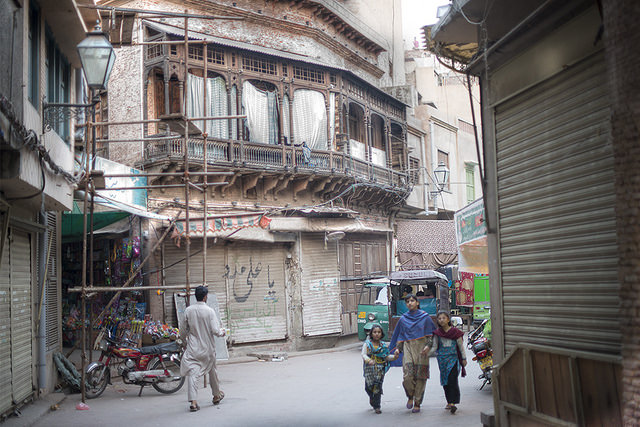
Despite all the hubbub of modern commerce and trade, one can still feel a sense of awe while touring the Walled City’s numerous historical treasures. The most popular attraction, of course, is the Lahore Fort (Urdu: شاہی قلعہ). Visitors enter this massive fort through the western Alamgiri Gate, which was built in 1657 by Aurangzeb. Just imagine what it must’ve been like when royal elephants used to walk through Alamgiri Gate to greet the Mughal royals!
The museums inside this fort will tell you all you need to know about the various Mughal and Sikh rulers who lived and governed here. There are also artworks, manuscripts, and weapons from the Mughal and Sikh eras inside this fort.
Although Lahore Fort was badly damaged by the Sikhs and British, it has now been fully restored. Be sure to ask a museum curator if you can tour the underground rooms if you’re visiting in the summertime. Also, bring at least 200 Pakistani Rupees with you to gain access to the fort.
Nearby Lahore Fort is the most famous mosque in the city: Badshahi Mosque (Urdu: بادشاہی مسجد). Although this mosque is no longer the largest in the world, it has some of the best-preserved Mughal frescoes. Spend as long as you need to fully admire the Mughals’ great gift for floral designs throughout this massive mosque. Although you can enter Badshahi Mosque for free, you’ll have to respect the local customs. That means removing your shoes at the entrance and, if you’re a female, wearing a shawl.
If you didn’t get your fill of exquisite Mughal era architecture from the Badshahi Mosque, then take a quick trip to the Wazir Khan Mosque (Urdu: مسجد وزیر خان). This mosque is located near Delhi Gate and is filled with some of the Mughals’ most impressive fretwork and tile-work. Built in the 17th century under the rule of Shah Jahan, visitors come from around the world to admire this mosque’s incredible frescoes and calligraphy.
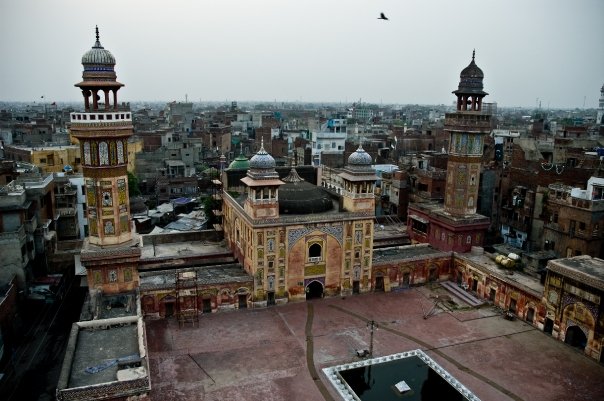
You might notice a strong Persian influence in structures like the Wazir Khan Mosque. It’s true that the Mughals drew a great deal of inspiration from the Persian Empire. Yet another structure in the Walled City that vividly shows this Persian influence is the Shahi Hammam, or the Imperial Baths. These baths were mainly used in the 17th century right after they were completed. In fact, the construction of both the Wazir Khan Mosque and the Shahi Hammam were both created by the same man: Hakim Shaikh Ilam-ud-din Ansari (aka Wazir Khan).
Ansari was a court physician to Shah Jahan who eventually became a nobleman and ruler of the city of Lahore. His baths were constructed in conjunction with the mosque and contain even more impressive Mughal frescoes. With generous donations from the Norwegian government, Pakistanis have been able to refurbish the Shahi Hamman to its former glory.
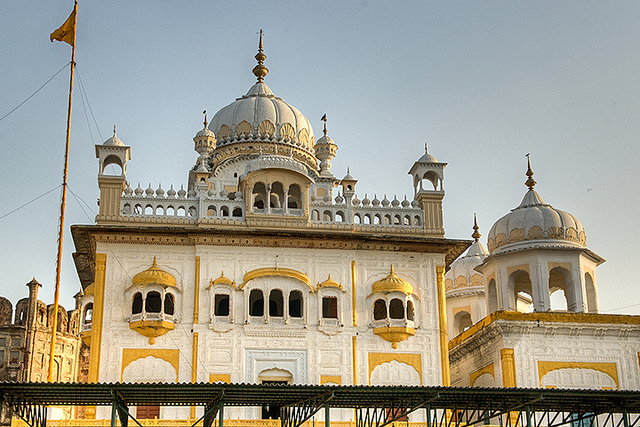
Yet another beautiful building in the Inner City is the Samadhi of Ranjit Singh (رنجیت سنگھ دی سمادھی). This building, which was built in the 19th century, houses the remains of the famous Sikh ruler Ranjit Singh. Right next to the Sikh temple called Gurdwara Dera Sahib, this building holds special significance for Sikhs all over the world. You’ll instantly be stunned by Samadhi’s intriguing architecture. It was actually built using three different styles: Sikh and Hindu temples as well as Islamic mosques.
For a taste of modern Pakistan, you can’t help stopping by the Minar-e-Pakistan tower. Built in 1940 to celebrate the Lahore Resolution that separated Muslims from Hindus in British India, this tall tower is often called the “Eiffel Tower of Pakistan.” Indeed, it really does look a great deal like the world-famous tower in Paris. The Minar-e-Pakistan is conveniently located in Iqbal Park, which is nearby Lahore Fort and Badshahi Mosque.
As you can see, there’s plenty to do and see in the famous Walled City of Lahore. This most ancient area of the world has been inhabited for thousands of years, and it probably will be inhabited for as long as humans remain on this earth. As you visit these incredible structures, you can’t help but feel the long stretch of continuous history that pulses through this vibrant area.
Photo Credits:
